How to Become a UGC Creator in 2026: Step-by-Step Guide
A plain-English guide to becoming a paid UGC creator from scratch — no follower count, no expensive gear, and no prior experience required.
Maya Rivera
June 28, 2026 · 8 min read
The short answer
To become a UGC creator, build 3–5 spec videos for brands that don't know you yet, set up a profile on a UGC marketplace like JoinBrands or Billo, and know your rate before anyone asks. Brands pay for content quality — your follower count is completely irrelevant.
UGC — user-generated content — is short-form video that brands pay creators to produce for their ads, social feeds, and product pages. The creator films it; the brand owns it and runs it as paid media. Your follower count has nothing to do with it.
Here is the full path from zero to first paid gig.
Step 1: Understand Exactly What Brands Are Buying
Before you film a single second, understand what you are selling. Brands are not buying your influence or your audience — they are buying video assets. A 15-second authentic-feeling product video that converts in a Meta ad is worth more to a DTC brand than a post from a 100K-follower creator.
UGC creators are, in practice, freelance ad actors and videographers. The deliverable is raw video files — sometimes edited, sometimes not — that a brand’s media buyer uploads directly to their ad account and runs as paid creative.
Common deliverable types:
- Unboxing videos — first-impression reactions filmed on opening a package
- Demo clips — showing a product in real, practical use
- Testimonial-style videos — “I’ve been using this for 30 days…” format
- Hook clips — 2–3-second attention-grabbing openers designed to stop the scroll in a feed
Understanding the format before you pitch matters. Brands brief you to a specific deliverable, and creators who know the vocabulary (hook, CTA, usage rights, raw vs. edited) come across as professionals from the first message.
For a deeper look at the formats that work in paid ads, read the UGC video hooks swipe file — it breaks down 30 examples by type.
Step 2: Build a Spec Portfolio Before You Have Any Clients
You cannot get UGC clients without samples. You can build samples without clients.
Choose 3–5 products you already own: a skincare item, a supplement, a coffee gadget, a workout accessory. Film short, brand-quality videos for each one as if a brand hired you. These are called spec pieces — unpaid demonstration videos that prove you can execute the format.
What separates a usable spec piece from wasted practice:
- Clean shot with controlled lighting and no distracting background
- A strong opening hook (the first 2–3 seconds determine whether anyone watches)
- One clear benefit per video, not a feature dump
- Natural delivery — not stiff, not over-rehearsed, but not rambling either
You don’t need to publish these anywhere. Save them to an organized Google Drive folder, give the folder a clean name (e.g. “Maya Rivera — UGC Portfolio”), and link that folder from every platform profile and every cold pitch you send.
For a full walkthrough with spec portfolio examples and exactly how to structure yours, see how to build a UGC portfolio with no clients.
Step 3: Get Your Gear Sorted (Keep It Minimal at First)
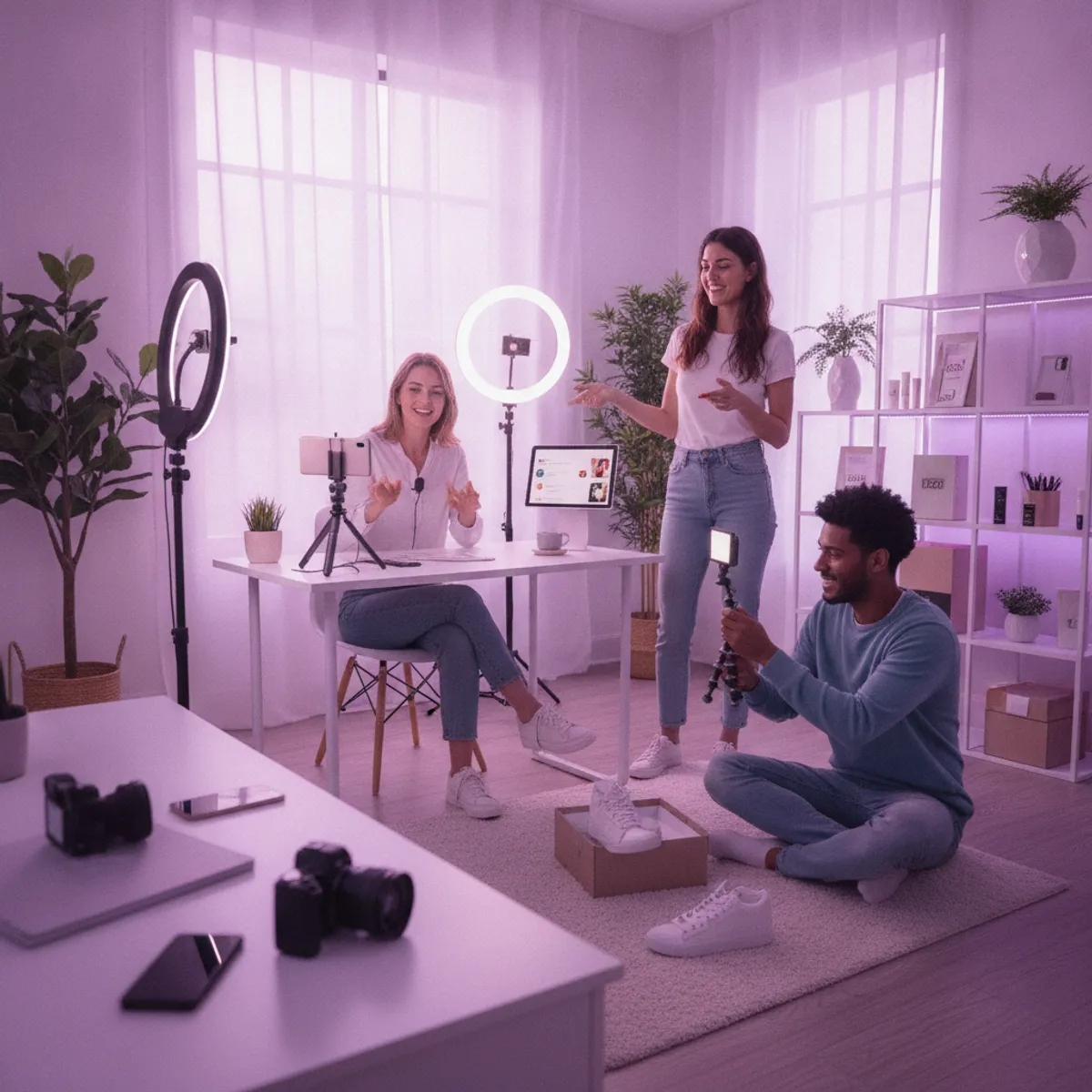
You can start with equipment you already own. This is not an exaggeration — the phone in your pocket shoots 4K with optical image stabilization built in. What beginners actually need is:
- Stability: a $15 phone tripod or flexible gorillapod so shots aren’t shaky
- Lighting: a $25–40 ring light, or a large bright window used as a natural light source
- Audio: film in a quiet room, or add a $20–30 clip-on lavalier mic for voiceover-heavy scripts
That covers 90% of UGC deliverables. Brands on platforms like Billo and JoinBrands routinely accept phone-shot content — they care about the video’s ability to hold attention, not whether it was shot on a Sony ZV-E10 II.
Upgrade when you are earning, not before. For specific gear recommendations including phone settings, lighting setups, and when it actually makes sense to buy a dedicated camera, see the UGC creator starter kit and gear guide.
Step 4: Create a Profile on a UGC Marketplace
UGC marketplaces connect brands posting campaign briefs with creators who apply for them. They handle contracts, brief delivery, and payment — you focus entirely on the video work.
The major platforms for new creators in 2026:
JoinBrands — beginner-friendly onboarding; brands post open briefs and you apply; steady volume of campaigns across product categories.
Billo — popular with DTC and e-commerce brands; straightforward creator approval process; payment is typically released on content delivery.
Insense — slightly higher bar for creators, but campaigns pay more and brands tend to have clearer briefs; good platform once you have a solid portfolio.
Trend (now part of Later) — lifestyle and consumer product focus; curated creator pool; worth joining once you have 4–5 polished samples.
The right starting move: create a complete profile on one or two platforms, not all four. A full profile on JoinBrands with a strong portfolio will outperform four bare-bones profiles every time. Master one, then expand.
For a side-by-side comparison — including which platforms pay fastest, which categories each one focuses on, and which ones are worth joining at the beginner level — see best UGC platforms for creators in 2026.
Step 5: Set Your Rates Before Anyone Asks
Brands ask for rates before you have had time to think. Know the number in advance so you respond with confidence rather than apologizing and promising to follow up.
Beginner starting points (US market, 2026):
| Deliverable | Price range |
|---|---|
| Raw video, no usage rights | $75–$150 per video |
| Raw video + 30-day ad usage | $150–$300 per video |
| Edited video + 30-day usage | $200–$400 per video |
| 3-video package with basic usage | $300–$600 |
Usage rights — also called licensing — is the additional fee brands pay to run your content in paid advertising. A brand using your video in their Meta ads for six months is paying for far more than one that posts it to their Instagram feed once. Always clarify usage scope in writing before you agree to a rate.
Never work for free in exchange for “exposure.” Your spec videos already gave you the practice content. Set a floor and hold it.
For a full breakdown including a downloadable rate card template and how to raise your rates as you build reviews, read UGC creator rates: what to charge brands in 2026.
Step 6: Apply to Briefs — and Don’t Wait for Inbound
The most common beginner mistake: sign up to a marketplace, set up a profile, and wait. Waiting is the slowest path to a first client.
Instead:
- Apply to every relevant brief on your marketplace immediately. Don’t filter aggressively based on follower requirements — most UGC platforms don’t require any following at all.
- Cold pitch directly to brands — find DTC companies on Instagram or TikTok whose product aesthetic you match, and send a short, specific DM or email. Include your portfolio link and one sentence about the type of video you would make for their specific product.
- Offer a competitive introductory rate for your first 2–3 gigs — not free, but at the lower end of your range — to get verified reviews and real brand-shot samples in your portfolio. Raise your rates as reviews accumulate.
A realistic first-month target: 2–3 paid gigs, at least one written review from a satisfied brand, and 2–3 brand-specific samples that replace your original spec pieces.
Step 7: Use a Contract From the First Paid Gig
Once a brand agrees to pay you, you need a basic agreement in place — even a simple one-page document that covers:
- What you are delivering (format, length, number of clips, raw vs. edited)
- The usage rights included and the usage period (30 days? 6 months? Perpetual?)
- Payment terms and when payment is due
- Your revision policy (how many rounds are included)
- Who owns the content after delivery
This matters in practice because “one video for their Instagram” and “one video for six months of Meta ads” are fundamentally different deliverables with very different market values. A written agreement makes the difference explicit before any confusion arises.
For a copy-paste starting point with all five essential clauses, see the UGC contract template.
What to Expect in Your First 30 Days
Most creators don’t land a paid gig in week one. Here is what a realistic first month looks like:
Week 1–2: filming spec content, setting up marketplace profiles, sending first applications and pitches. Expect no responses yet — that is normal.
Week 2–3: first marketplace responses, possibly a brief acceptance. Iterate on your pitch copy based on what brands are responding to. Keep applying.
Week 3–4: first paid deliverable completed. Deliver on time, ask for written feedback, and use the resulting footage as a portfolio upgrade. Reassess your rate for the next gig.
The compounding part of UGC work kicks in around month three, when reviews, real portfolio pieces, and a clearer understanding of which niches pay well have started to accumulate. The first month is groundwork, not payday.
The Shortest Version
No followers needed. No expensive gear needed. What you need:
- A spec portfolio (3–5 videos made for products you already own)
- A complete profile on one UGC marketplace
- A clear rate and an understanding of usage rights
- Consistent applications — and a few direct brand pitches
Iterate from there. Everything else builds on those four things.
Frequently asked questions
Do you need a social media following to be a UGC creator?
No. UGC is sold directly to brands for their ads — your audience size doesn't matter. Brands care about video quality, storytelling style, and whether your content fits their product. Many successful UGC creators have private or near-empty social accounts.
How long does it take to get your first UGC client?
Most creators land their first paid gig within 2–4 weeks of having a spec portfolio ready and a profile on at least one UGC marketplace. Cold pitching directly to brands speeds things up; waiting for inbound inquiries slows them down considerably.
What equipment do you need to start making UGC?
Your current smartphone is enough to start. Add a $25–40 ring light for clean lighting and a $15 phone tripod for stability. You don't need a mirrorless camera — clean, well-lit, steady footage beats expensive gear shot in poor conditions every time.
How much can beginner UGC creators earn per video?
Beginners typically charge $75–$150 per raw video with no usage rights, and $150–$300 when the brand wants to run it as a paid ad (usage rights included). Rates rise quickly once you have 3–5 satisfied clients and positive reviews on a marketplace.
Maya Rivera
UGC Creator & Editor-in-Chief
Maya makes short-form ads for DTC beauty and wellness brands and writes the playbooks she wishes she'd had on day one.
3+ years creating UGC for 40+ brands; built a UGC business to full-time income before turning 24.
Steal the UGC playbook
One email a week: a pitch template, a gear pick, and the trend that's actually moving brand budgets. Free.
No spam. Unsubscribe anytime.