UGC for Beginners: What to Do in Your First 30 Days
A 30-day action plan for brand-new UGC creators — week-by-week checklist covering gear, portfolio, platforms, and first pitch.
Maya Rivera
July 26, 2026 · 7 min read
The short answer
In your first 30 days as a UGC creator, focus on five actions: understand that brands are buying video assets (not your audience), shoot 3 spec videos with basic lighting, build a simple portfolio page, create a profile on one UGC marketplace, and send your first 5 pitches. You can complete all of this with a smartphone.
UGC — user-generated content — is short-form video that brands pay creators to produce for their ads, social feeds, and product pages. Your follower count is completely irrelevant. What matters is whether your video makes someone stop scrolling and consider buying.
The 30-day frame works because it is long enough to land a first client but short enough to feel urgent. Here is exactly what to do, in order.
Before You Start: One Thing to Understand
Brands are not hiring you as an influencer. They are buying video assets — raw files they will upload to their ad account and run as paid media. You are, in practice, a freelance ad actor and videographer.
This changes everything. You do not need followers. You do not need a big audience. You need to be able to produce clean, authentic-looking video that converts in a 15-second ad.
If you want the full picture of the UGC creator path before diving into the checklist, read how to become a UGC creator in 2026 and come back here when you are ready to execute.
Week 1 (Days 1–7): Build Your Foundation
Watch 15 UGC ads
Open TikTok or Meta’s Ad Library and watch 15 UGC ads in product categories that interest you — skincare, supplements, kitchen tools, fitness gear, apps. Notice the patterns: direct-to-camera hooks, natural lighting, everyday settings, and a clear product moment. This is what you are building toward.
Do not skip this step. Creators who understand what a finished ad looks like shoot better spec videos.
Set up your gear
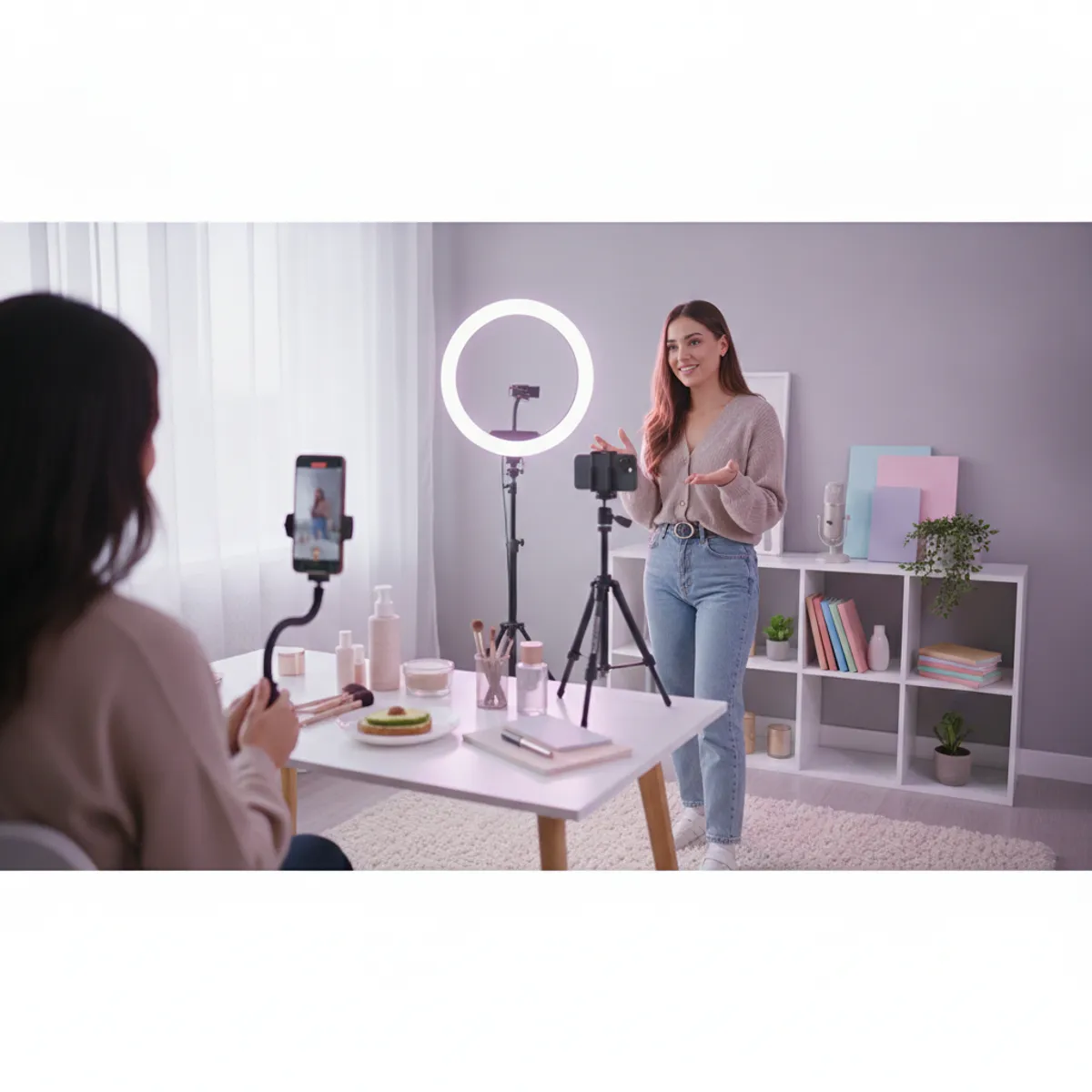
Your smartphone is sufficient. The only two additions worth making immediately:
- A ring light — for consistent, soft lighting regardless of the room or time of day
- A tripod — so your footage is stable without a second person holding the phone
A UBeesize 12-inch ring light with tripod stand covers both needs in one kit and fits any smartphone or small camera. Under $40 shipped.
When you are ready to invest in a dedicated camera, the best cameras for UGC creators guide breaks down every price range. For a full beginner kit list, see the UGC starter kit gear guide.
Pick your niche angle
You do not need to lock yourself into one product category forever, but having a clear angle makes your first pitch wave more targeted and your spec videos more coherent.
Think about products you already own and genuinely like — skincare you use daily, a protein powder you actually drink, a kitchen gadget you reach for every week. Brands want creators whose lifestyle fits their product, and you will shoot better content for things you know.
List 10 products you own and like. These become your spec video subjects in Week 2.
Week 2 (Days 8–14): Create Your First Content
Film 3 spec videos
Spec videos are unpaid samples that prove you can deliver the format. Pick 3 products from your list and film a 15–30 second video for each: a hook that stops the scroll, a product demonstration or use moment, and a simple close.
Do not wait for perfect lighting or a perfect script. Well-lit, stable footage with a confident hook is what clients are actually evaluating — not cinematic production quality.
Edit to platform-native length
Keep edits minimal: cuts, captions if natural to the format, a quick color grade if needed. The output should feel native to TikTok or Instagram Reels — not polished in a way that signals “agency production.”
Export each video in 9:16 vertical at 1080p minimum.
Build your portfolio page
Your portfolio is the only thing a brand will look at before deciding whether to hire you. It does not need to be complex.
A single-page Beacons or Contra profile with your 3 spec videos, a two-sentence bio, and a contact link is enough to start pitching. See how to build a UGC portfolio with no clients for a step-by-step walkthrough on what to include, which hosting tools are free, and how to structure the page for brand decision-makers — not followers.
Week 3 (Days 15–21): Get on the Platforms
Apply to 2 UGC marketplaces
UGC marketplaces connect you with brands who post active briefs. You apply, the brand reviews your portfolio, and if it is a fit, they commission your video. No cold outreach required on your end — the demand comes to you.
Apply to at least two:
| Platform | Best for | Beginner-friendly? |
|---|---|---|
| JoinBrands | Wide product range, frequent briefs | Yes — accepts creators with no prior paid work |
| Billo | Beauty, lifestyle, consumer goods | Yes — portfolio-first evaluation |
| Insense | Higher-value projects, established brands | Moderate — slightly more selective |
Start with JoinBrands and Billo. Both accept creators with no prior client history as long as your spec videos demonstrate the right quality.
Set your rates before anyone asks
Know your numbers before the first brand asks. Beginners typically start at:
- $75–150 per raw video (no usage rights) — brand uses it organically
- $150–300 per video if the brand wants to run it as a paid ad (usage rights included)
Rates rise quickly after 3 satisfied clients and positive marketplace reviews. The UGC creator rates guide for 2026 breaks down current rates by niche, deliverable type, and experience tier — bookmark it before your first negotiation.
Complete your marketplace profile
Upload your strongest spec video as the primary preview. Fill in your categories, a brief bio that signals which product types you cover, and your rate range. A complete profile generates more brief invitations than a sparse one.
Week 4 (Days 22–30): Start Pitching
Respond to active briefs every day
By now, your marketplace profiles are live. Check for active briefs daily and apply to anything that matches your angle. Write a short, specific application: reference the product by name, say why your style fits their brief, and link your portfolio. Generic applications get passed over.
Send 5 cold pitches
Do not wait for inbound only. Pick 5 brands whose products you own or would genuinely use, find a contact email or Instagram DM, and send a short pitch.
A strong pitch is 3–4 sentences: who you are, what specific video you can make for them, and a link to your portfolio. Nothing more. UGC pitch email templates includes 3 copy-paste formats for beauty, food, and tech categories along with a subject-line swipe file.
Review what you have built
By Day 30, check off each of these:
- 3 spec videos finished and live on your portfolio page
- Profiles created on at least 2 UGC marketplaces
- At least 5 pitches sent (marketplace applications or cold)
- At least 1 response received — hire, pass, or revision request
If you have all four, you have built the foundation. Most creators who reach a first paid gig do so within 45–60 days of consistent pitching. The ones who stall usually skipped the spec videos, launched their portfolio before it was ready, or waited too long to send the first pitch.
The Full 30-Day Checklist
Week 1: Foundation
- Watch 15 UGC ads in your target product categories
- Set up ring light and tripod
- List 10 products you own and like
- Pick your niche angle
Week 2: Create
- Film 3 spec videos
- Edit and export each in 9:16 at 1080p
- Build a portfolio page (Beacons, Contra, or similar)
Week 3: Platform
- Apply to JoinBrands and Billo
- Set your rate range before anyone asks
- Complete your marketplace profile with primary spec video
Week 4: Pitch
- Apply to 5+ active marketplace briefs
- Send 5 cold pitches to brands you already use
- Review: spec videos done, profiles live, pitches sent
That is the full roadmap. It works when you follow it in order — not when you read about it.
Frequently asked questions
How long does it take to make money as a UGC creator?
Most beginners land their first paid gig within 3–5 weeks if they have at least 3 spec videos and a profile on one marketplace like JoinBrands or Billo. Cold pitching directly to brands speeds things up — waiting for inbound inquiries slows it down considerably.
Do you need expensive gear to start UGC?
No. Your smartphone is enough to begin. A ring light ($25–50) and a tripod ($15–25) are the only additions worth making in week one. Clean, well-lit footage consistently beats expensive gear shot in poor conditions.
What should a beginner UGC creator charge?
Start at $75–150 per raw video (no usage rights) or $150–300 if the brand wants to run it as a paid ad. Raise your rates after your first 3 satisfied clients. See our full UGC creator rates guide for breakdowns by niche and experience level.
Which UGC platform should a beginner join first?
JoinBrands and Billo are the most beginner-friendly — both accept creators with no prior clients and have clear application processes. Apply to both in week one and respond actively to whichever sends briefs in your category.
Maya Rivera
UGC Creator & Editor-in-Chief
Maya makes short-form ads for DTC beauty and wellness brands and writes the playbooks she wishes she'd had on day one.
3+ years creating UGC for 40+ brands; built a UGC business to full-time income before turning 24.
Steal the UGC playbook
One email a week: a pitch template, a gear pick, and the trend that's actually moving brand budgets. Free.
No spam. Unsubscribe anytime.