UGC Photos: How to Shoot Them and What Brands Actually Pay
How to shoot UGC photos brands buy — gear, lighting, and shot types for product flat lays and lifestyle stills, plus current bundle rates.
Maya Rivera
August 8, 2026 · 8 min read
The short answer
UGC photos are still photos of a product in real use — lifestyle shots, flat lays, and detail shots — that brands license for Amazon listings, website product pages, and Meta image ads. A beginner photo bundle of 5–8 images typically pays 75 to 175 dollars; established creators with a strong portfolio can command 350 to 750 dollars for the same bundle size.
Not every UGC brief asks for video. A growing share of the requests I see — especially from Amazon sellers, skincare brands, and home goods companies — want still photos: a product on a real countertop, a flat lay from above, a close-up of the label. This guide covers how to shoot the photo formats brands actually buy, what gear you need (not much), and what to charge.
Our UGC examples guide covers UGC photo as one of ten formats brands pay for. This guide goes deeper — the shot list, the gear, and the workflow for photo-specific bookings.
Why Photo UGC Is Worth Learning
Photo UGC fills a real gap in brand marketing. A brand selling twelve product variants cannot always staff a full studio photo shoot for every SKU — that’s expensive and slow. What they can do is hire a handful of creators to shoot each variant in a real home, at a fraction of studio cost, with images that read as more relatable to a shopper scrolling a product page than an overlit studio shot.
Three places photo UGC shows up most:
Amazon and marketplace listings. Sellers need lifestyle and detail images beyond the standard white-background hero shot — these often convert better because they show the product in context.
Website product pages. Brands mix studio photography with creator-shot lifestyle images to make a product page feel more authentic and less like a catalog.
Image-based paid ads. Meta and Pinterest still run static image ads alongside video. A strong lifestyle photo with a clear product and a scroll-stopping composition performs as well as video for some categories, at a fraction of the production cost.
Photo bookings also move faster than video. No scripting, no voiceover, no audio setup — you can shoot a full bundle in under an hour once you know the shot list a brief expects.
The Three Shot Types Brands Ask For
Almost every photo brief breaks down into these three categories. Deliver all three in a bundle and you cover what most brands need without them having to ask twice.
Lifestyle shots. The product in active use in a real setting — held in a hand, sitting on a breakfast table, next to a laptop on a desk. This is the shot that makes a shopper picture the product in their own life. Natural, slightly imperfect framing reads as more authentic than a perfectly centered composition.
Hero shots. A clean, simple shot with the product as the clear subject — think a neutral background, good light, nothing distracting in frame. This is the shot most likely to get used as a primary listing image, so it needs to be sharp and well-lit even though it’s still shot at home rather than in a studio.
Detail shots. Close-ups on texture, the label, a cap or closure mechanism, size reference next to a common object (a hand, a coffee cup). Brands use these to answer buyer questions a hero shot can’t — “how big is this really” or “what does the fabric look like up close.”
A typical bundle mixes two to three lifestyle shots, one or two hero shots, and one or two detail shots. Check the brief — some brands weight heavily toward one category, especially skincare and beauty brands that want mostly close-up detail work.
Gear: What You Actually Need
The good news for anyone starting out: photo UGC has a lower gear bar than video.
Your phone’s camera is enough. Any smartphone from the last three or four years shoots resolution well beyond what a product page or Amazon listing needs. Shoot in your phone’s native camera app rather than a third-party app — native camera software handles focus and exposure more reliably for straightforward product shots.
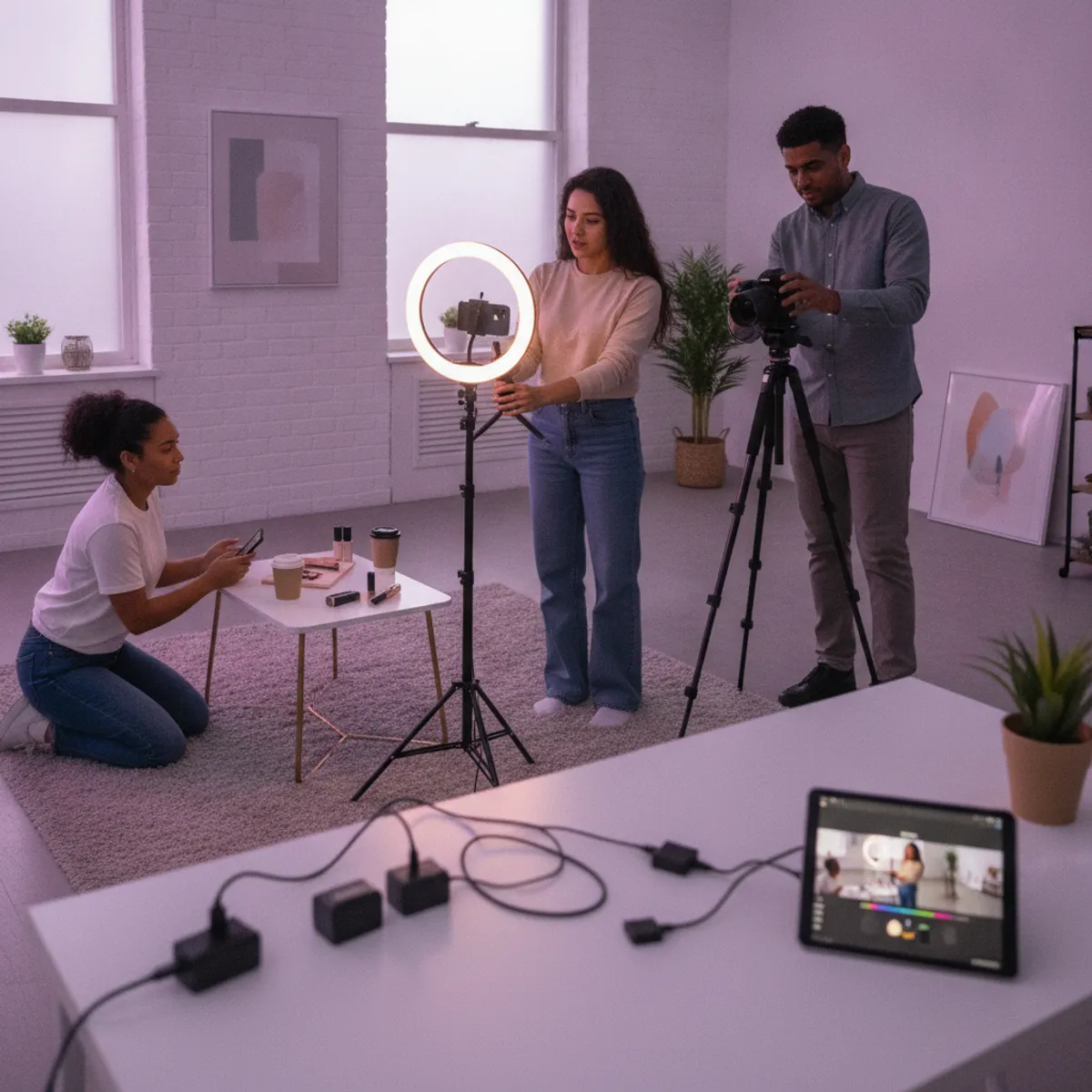
Light matters more than the camera. The single biggest quality jump for beginners is adding a basic ring light or shooting next to a window with strong, indirect daylight. Our ring light guide breaks down picks by budget — for photo work specifically, a compact 10” desk-mount ring light is often more useful than a full 18” floor kit, since you’re usually shooting a product on a table or counter rather than yourself at full length.
A plain backdrop. A poster board, a clean wall, or a stretch of counter without visible clutter covers most hero and detail shots. A few brands request a specific backdrop color in the brief — read it closely before you shoot.
A tripod or phone stand — optional but useful. For overhead flat lays especially, a small tabletop tripod with a phone clamp keeps the shot stable and lets you adjust the same framing across multiple product angles without re-setting the shot each time.
You do not need a DSLR, a lightbox, or studio strobes to book photo UGC work. Brands hiring creators for this format specifically want the relatable, shot-at-home look — over-produced images can actually work against you in a photo UGC brief.
How to Shoot a Photo Bundle
- Read the brief for shot count and mix. Most bundles run 5 to 8 images. Note if the brand specifies a ratio (for example, “3 lifestyle, 2 hero, 3 detail”) or leaves it open.
- Set up your light first, then the product. Get consistent, flattering light in your shooting spot before you start arranging the product — this saves you from reshooting a whole set because the light shifted.
- Shoot more angles than you need. Take 3–4 variations of each planned shot (slightly different angle, crop, or hand position). Editing down from extra options produces a stronger final set than trying to nail one perfect frame per shot.
- Check focus and framing on the actual product label. Brands reject images where the label is blurry or partially cropped more than any other issue — zoom in on your phone screen before moving to the next shot.
- Edit lightly. Adjust exposure, white balance, and crop. Avoid heavy filters — brands want the product’s true color represented accurately, especially for skincare, food, and apparel categories where color accuracy affects buyer expectations.
- Deliver as high-resolution JPEGs in a shared folder, organized or labeled by shot type. Check the brief for required aspect ratio — vertical (4:5 or 9:16) for Instagram and Amazon mobile, horizontal (16:9) for banner-style ads.
What Photo UGC Pays
Photo bundle rates track the same experience tiers as video work, just at a lower per-deliverable rate since shoot and edit time is shorter:
| Tier | Photo Bundle (5–8 images) |
|---|---|
| Beginner (0–5 delivered projects) | 75 to 175 dollars |
| Mid-tier (6–25 delivered projects) | 175 to 350 dollars |
| Established (proven portfolio, consistent demand) | 350 to 750 dollars |
These figures come from our full 2026 rate breakdown, which also covers video rates and usage-rights pricing — the same usage-rights logic applies to photos. A creation fee covers organic use (the brand’s own feed, site, and emails); running your photo in a paid ad is a separate license and should cost more.
Photo work is a strong way to build volume early. A single hour-long shoot can produce two or three separate bundles if you photograph a couple of product angles with intent, and the lower time investment per deliverable means you can take on more bookings in parallel with video work.
Add Photo Work to Your Media Kit
If photo UGC is part of your service offering, say so explicitly. Buyers browsing creator profiles often assume “UGC creator” means video-only unless you list photo bundles as a separate line item. Our media kit template has a dedicated content-type section — add “photo bundle (5–8 images)” alongside your video rates so brands know it’s on the menu before they reach out.
The Bottom Line
Photo UGC is the fastest way to add a second income stream to your creator business without buying new gear or learning a new skill from scratch. If you already own a smartphone and a basic ring light, you can shoot a bundle brands will pay for this week. Start by pitching photo bundles to brands you already have a relationship with — many will take a photo add-on to an existing video booking without needing a separate sales conversation.
Get weekly UGC rate benchmarks and gear picks — join the UGC Playground newsletter.
Frequently asked questions
What is UGC photography?
UGC photography is still images of a product shot by a creator in a real, relatable setting — not a studio production. Brands use these for Amazon listing images, website product pages, and image-based ads on Meta and Pinterest. The three shot types brands ask for most are lifestyle (product in active use), hero (clean background, product prominent), and detail (texture, label, size reference).
How much do UGC photo bundles pay?
A standard bundle of 5 to 8 edited photos pays 75 to 175 dollars for beginners, 175 to 350 dollars for mid-tier creators with 6 to 25 delivered projects, and 350 to 750 dollars for established creators with a proven portfolio. Rates track the same experience tiers as UGC video.
Do I need a professional camera to shoot UGC photos?
No. A recent smartphone shot in good natural light or with an affordable ring light produces images that meet most brand briefs. Brands hiring creators for photo UGC are paying for a relatable, authentic setting, not studio-grade equipment — an iPhone with a clean background and a $30–60 ring light covers the large majority of requests.
How is UGC photo different from UGC video?
Photo UGC takes less time to shoot and edit than video, so per-deliverable rates run lower, but brands often request larger batches — five to ten images per session versus one or two videos. Photo work also skips scripting, voiceover, and audio setup, making it a faster way to fill out a portfolio or add income between video bookings.
Maya Rivera
UGC Creator & Editor-in-Chief
Maya makes short-form ads for DTC beauty and wellness brands and writes the playbooks she wishes she'd had on day one.
3+ years creating UGC for 40+ brands; built a UGC business to full-time income before turning 24.
Steal the UGC playbook
One email a week: a pitch template, a gear pick, and the trend that's actually moving brand budgets. Free.
No spam. Unsubscribe anytime.